 by
by The history of wrestling in Nigeria begins long before modern sports federations, stadiums and Olympic medals. Across many Nigerian communities, wrestling served as entertainment, physical training, a test of courage and a way for young men to earn social recognition. Over time, these local contests influenced the development of organised amateur wrestling and helped Nigeria become one of Africa’s strongest wrestling nations.
Traditional wrestling in Nigerian communities
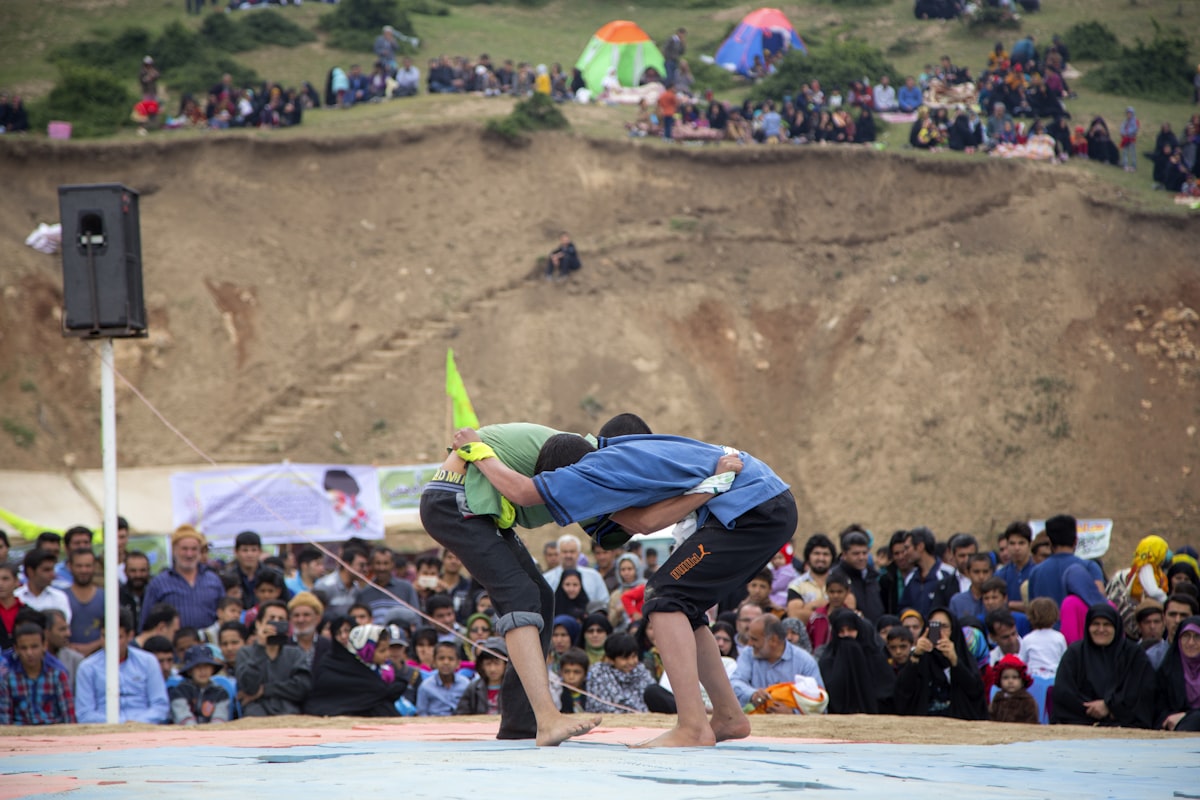
Traditional wrestling developed in different forms across Nigeria rather than from one single national style. In the north, Hausa wrestling, commonly called kokawa, became especially prominent. It was often staged during festivals and community gatherings, with wrestlers competing before large crowds and local leaders. Contestants relied on balance, grip, timing and throwing techniques, while preparation could include physical conditioning and traditional practices.
Wrestling also formed part of cultural celebrations in several southern communities. Yoruba, Igbo and other ethnic groups maintained local wrestling traditions with their own rules, ceremonies and forms of recognition. These contests were connected to community identity and social life, not simply to sport as it is understood today.
Because many of these traditions were transmitted orally, it is difficult to assign one starting date to Nigerian wrestling. Their history predates written sporting records, and rules differed from one location to another. This regional diversity remains essential to understanding how wrestling took root in Nigeria.
From local contests to organised sport
Modern amateur wrestling expanded as schools, clubs, sports councils and national competitions created more standardised rules. The growth of organised sport after independence gave athletes opportunities to compete beyond their home communities. State sports councils became important in identifying talent, while national competitions brought wrestlers from different regions into the same system.
The National Sports Festival, first held in 1973, became one of the main platforms for developing Nigerian wrestlers. It allowed athletes to compete regularly, gain experience under formal rules and attract selection for national teams. University competitions and military or institutional sports programmes also contributed to the development of elite athletes.
This transition did not replace traditional wrestling. Instead, it created two connected but distinct paths: cultural wrestling performed according to local customs, and amateur wrestling conducted under national and international regulations. A successful traditional wrestler still needs to learn the technical and tactical demands of freestyle or other recognised competitive formats.
Nigeria’s rise in international wrestling
Nigeria’s international breakthrough is strongly associated with Daniel Igali. Born in Bayelsa State and later representing Nigeria, Igali won the men’s freestyle 69-kilogram gold medal at the 2000 Sydney Olympic Games. His victory was a landmark moment for Nigerian wrestling and demonstrated that athletes from the country could compete successfully at the highest global level.
Earlier generations had already represented Nigeria at African and international events, but Igali’s Olympic success gave the sport greater visibility. It also strengthened interest in coaching, talent identification and the development of wrestling facilities. Nigerian wrestlers continued to compete at African championships, Commonwealth Games, World Championships and Olympic qualifying events.
Women’s wrestling became another major source of international success. Wrestlers such as Mercy Genesis, Blessing Oborodudu and Odunayo Adekuoroye helped establish Nigeria as a serious force in women’s freestyle wrestling. Oborodudu’s silver medal at the Tokyo 2020 Olympic Games, held in 2021, was Nigeria’s first Olympic wrestling medal by a woman and one of the country’s most significant recent achievements in the sport.
Women’s wrestling and the modern development pathway
The progress of Nigerian women’s wrestling reflects broader changes in access to competitive sport. Athletes now emerge through state programmes, clubs, school competitions and national trials before moving to continental and global events. Their success has challenged the older perception that wrestling is mainly a men’s sport.
Despite this progress, athletes still face practical difficulties. Regular access to safe training halls, wrestling mats, qualified coaches, medical support and international competition can be limited. Travel and preparation costs also affect how often wrestlers compete against opponents from outside Africa. These issues influence the country’s ability to turn promising young athletes into consistent medal contenders.
Traditional wrestling and Olympic wrestling compared
Traditional Nigerian wrestling and Olympic-style wrestling share an emphasis on strength, balance and control, but they are not identical. Traditional contests may include distinctive clothing, music, ceremonies, local officials and rules agreed within a community. The atmosphere is often as important as the result.
International freestyle wrestling uses a standard mat, weight classes, time periods and scoring rules. Wrestlers score by taking an opponent down, exposing the opponent’s back or forcing a controlled position. Matches are overseen by trained officials, and athletes must meet the regulations of the international governing system.
The two forms can support each other. Traditional wrestling helps preserve cultural knowledge and can introduce children to grappling, while modern wrestling provides a route to national teams, scholarships and international competition. Treating them as exactly the same, however, overlooks the history and purpose of each tradition.
Frequently asked questions about Nigerian wrestling history
What is the oldest form of wrestling in Nigeria?
There is no single officially documented oldest form. Wrestling traditions existed in several communities before written sports records, and Hausa kokawa is among the best-known historical forms. Other regions also developed their own contests and customs.
Who won Nigeria’s first Olympic wrestling gold medal?
Daniel Igali won Nigeria’s first Olympic wrestling gold medal at the 2000 Sydney Games in men’s freestyle wrestling.
Who is Nigeria’s most successful female Olympic wrestler?
Blessing Oborodudu is one of Nigeria’s leading female Olympic wrestlers. She won a silver medal at the Tokyo 2020 Olympics, staged in 2021.
Is Hausa kokawa the same as freestyle wrestling?
No. Hausa kokawa is a traditional Nigerian wrestling form with its own cultural setting and rules. Freestyle wrestling is an internationally standardised competitive discipline. Athletes may move between the two, but the formats remain different.
Why wrestling remains important in Nigeria
Wrestling connects Nigerian sporting history with local identity, community festivals and international achievement. Its development shows how indigenous physical traditions can coexist with modern competition. Continued investment in coaching, facilities, women’s programmes and youth competitions will determine how strongly the next generation builds on that history.