 by
by The false start rule in athletics determines when a runner has begun moving before the starting signal. In most sprint races, one athlete can lose the race before the first stride if the start system records an illegal reaction. The exact consequence depends on the event and whether it is a standard race or a combined event.
What counts as a false start?
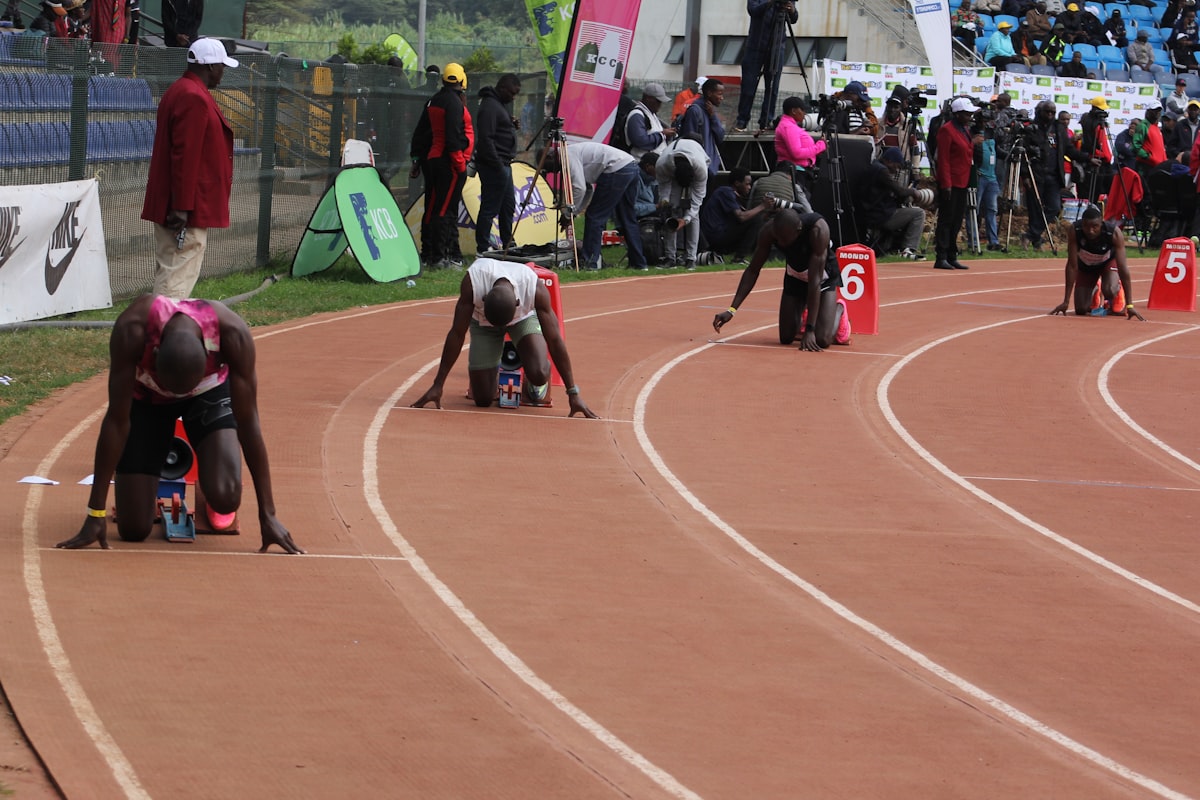
For races up to and including 400 metres, athletes normally use starting blocks and a crouch start. After the starter gives the “set” command, runners must remain motionless until the starting signal. A movement that begins too early can be judged a false start.
Electronic starting systems generally identify a reaction time of less than 0.100 seconds after the starting signal. This is the usual false start threshold because a voluntary human reaction faster than one tenth of a second is considered unlikely. The blocks detect pressure changes, while the starter’s signal is linked to the timing system.
The rule is not limited to a runner leaving the blocks completely. A noticeable movement before the gun, such as releasing pressure or beginning a start action, may also lead to a recall or disqualification if the starter and officials determine that the athlete did not remain still.
What is the penalty for a false start?
Under the standard World Athletics false start rule, the athlete responsible for a false start in an individual race is disqualified. This is commonly described as the one-false-start disqualification rule: officials do not normally give each runner a warning before applying the penalty.
If the start is clearly disrupted by an external issue, the starter may recall the race without disqualifying a runner. For example, officials may stop the start because of a technical problem, an unusual sound or another circumstance that is not caused by an athlete. The starter and referee decide whether the race should be restarted and whether any penalty is appropriate.
A disqualified athlete must leave the competition in that event. In a relay, the consequences can affect the whole team because the offending runner represents the relay squad.
How combined events differ
Combined events such as the decathlon and heptathlon use a different approach. In these competitions, athletes are normally allowed one false start collectively in each race. That first false start is charged to the field rather than automatically disqualifying the athlete responsible.
After the field has used that allowance, any athlete responsible for another false start is disqualified. This is why the false start rule in a decathlon or heptathlon can differ from the rule in a standalone 100-metre or 200-metre race.
Do longer races use the same starting procedure?
No. Races longer than 400 metres generally use a standing start rather than starting blocks. Athletes still have to wait for the starter’s signal, but the mechanics and officiating are different from a sprint start. A runner who moves before the signal may be recalled, and officials assess the movement under the rules for that event.
For 4 × 400-metre relays and other events covered by the sprint-start regulations, athletes may use blocks and the electronic reaction-time system. The event programme and the applicable World Athletics technical rules should be checked if the race format is unusual.
False start, slow reaction and a recalled start
A slow reaction is not a false start. A runner who reacts after the signal has simply lost time, even if the delay is substantial. The problem occurs when the athlete initiates the start before the signal or reacts below the permitted threshold.
A recalled start is also not automatically a disqualification. The starter can fire a recall signal when the start is unsafe or invalid. Officials then determine whether an athlete caused the problem, whether the field receives a warning, or whether the responsible runner must be disqualified.
In practice, this distinction matters after a noisy stadium start, a malfunctioning speaker or movement by an athlete before the “set” command. The referee reviews the circumstances rather than treating every restart as an athlete’s false start.
How sprinters can avoid a false start
- Settle fully before “set”: Do not rush into the final position or adjust a hand, foot or hip after becoming set.
- Keep pressure controlled: Press evenly against the blocks instead of anticipating the gun.
- React to the signal, not the starter’s movement: The starter’s voice, arm movement or pauses are not the starting signal.
- Practise race conditions: Training should include different delays between “set” and the gun so the athlete does not predict the timing.
- Check equipment and lane setup: Incorrectly positioned blocks can create instability that causes an involuntary movement.
Athletes should also know the meet’s instructions. Local competitions in Nigeria generally follow World Athletics rules, but school, university and community meets may publish additional procedures for protests, timing equipment and race recalls.
Common questions about the athletics false start rule
Is a false start always an immediate disqualification?
In most individual sprint races, yes: the athlete responsible is disqualified. Combined events have a field-wide first-false-start allowance, and officials may restart a race without a penalty when the cause is external or unclear.
What is the 0.100-second rule?
It is the standard electronic reaction-time threshold used in many races up to 400 metres. A reaction recorded below 0.100 seconds is normally treated as a false start, subject to the starter’s and referee’s decision.
Can a runner appeal a false start?
An athlete or team representative may use the meet’s protest and appeal process. Video, block data and the referee’s report may be considered, but an appeal does not guarantee that the disqualification will be overturned.
Does the rule apply to every athletics event?
No. Starting procedures vary between sprint races, relays, middle-distance races and combined events. The race distance, use of blocks and competition format determine which false-start provision applies.