
 by
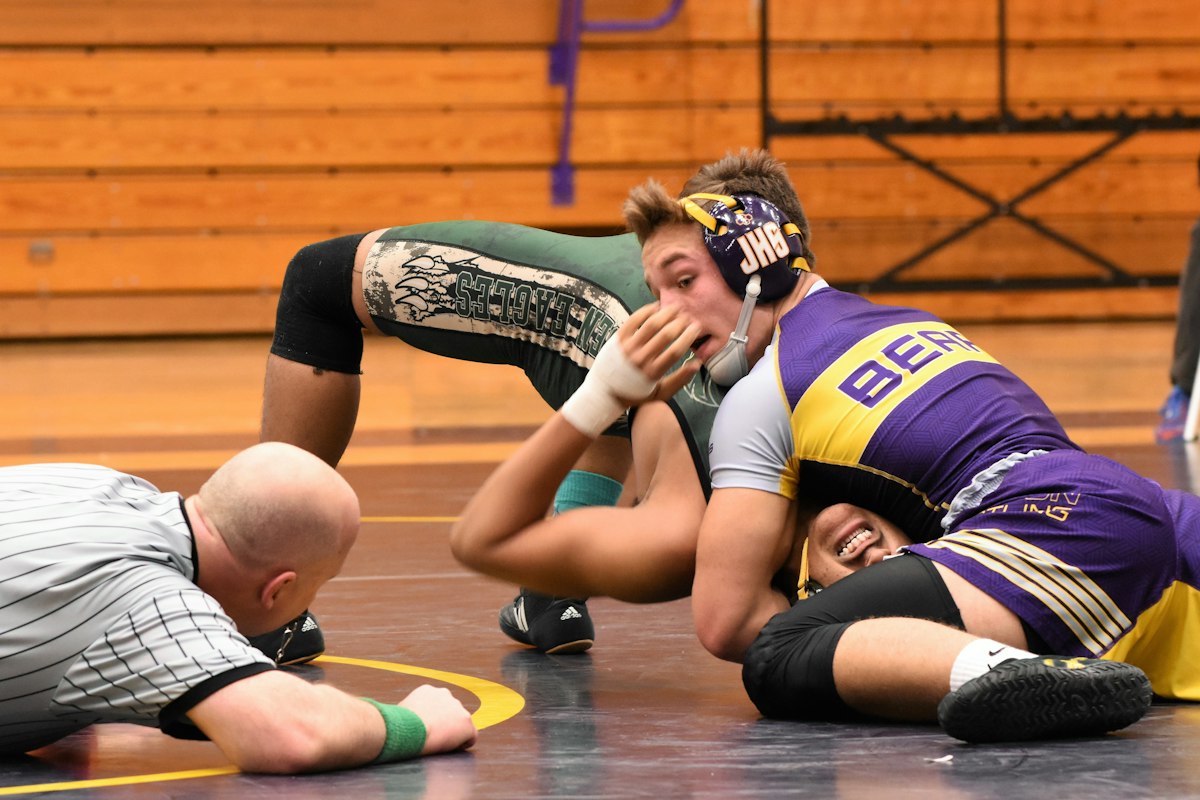
by A wrestling reversal happens when the wrestler who is underneath gains control of the opponent. The move changes the position from defence to offence: instead of escaping completely, the bottom wrestler turns the exchange around and establishes control on top.
That distinction matters because a reversal is normally worth more than an escape. The exact scoring and terminology can vary between freestyle, folkstyle and competition rules, but the central idea stays the same: control changes hands.
What is a reversal in wrestling?
In simple terms, a reversal is a change of control from one wrestler to the other. A common example begins with one wrestler on top in referee’s position. The bottom wrestler creates space, turns toward the opponent, and comes up behind them. Once control is established, the action is scored as a reversal.
A wrestling reversal is not just a scramble or a near-turn. The official must be able to identify a real change in control. Briefly touching the opponent’s back, rolling through a takedown attempt or escaping to a neutral position does not automatically count.
In folkstyle wrestling, a reversal generally earns two points. An escape usually earns one point, while a takedown normally earns two. Freestyle wrestling uses different scoring situations, so competitors should check the rules of the specific event before comparing points.
Reversal versus escape
The difference between a wrestling escape and a reversal is control. With an escape, the bottom wrestler gets away and returns both wrestlers to a neutral position. Neither athlete has control after the action.
With a reversal, the bottom wrestler comes out on top and controls the opponent. The move therefore changes who is attacking rather than simply ending the hold.
- Escape: the bottom wrestler breaks free without taking control.
- Reversal: the bottom wrestler breaks free and gains control on top.
- Scramble: both wrestlers fight for position, but the official waits to see who establishes control.
- Near fall: one wrestler exposes the opponent’s back toward the mat long enough to earn points; it is separate from the reversal itself.
How wrestlers create reversal opportunities
Successful reversals usually begin before the turn. The bottom wrestler needs to improve position, remove the top wrestler’s control and move toward a safer angle. Staying flat gives the opponent more pressure and makes a reversal harder to finish.
Common wrestling reversal techniques include a sit-out, switch, granby-style roll and stand-up into a re-attack. A sit-out creates distance by turning the hips away from the opponent. A switch turns the bottom wrestler underneath the opponent’s arms and can lead directly to control behind the hips.
A granby-style movement uses a shoulder roll and hip rotation to clear the opponent’s control. It can work well against pressure from behind, but it requires timing and body awareness. In many situations, a controlled hip-heist or stand-up is safer than attempting a large roll.
The finish is the decisive part. The wrestler must clear the opponent’s hands, get the hips underneath the body, come behind the opponent and hold control long enough for the referee to recognise the change.
Situations that often lead to reversals
Reversals are common when the top wrestler becomes too aggressive or loses balance while trying to turn the opponent. A poorly controlled tight waist, an overextended ride or pressure directed in the wrong direction can give the bottom wrestler an opening.
Another opportunity appears when the top wrestler’s hands separate from the opponent’s hips. The bottom wrestler may then build a base, turn into the gap and attack the corner. Good wrestlers look for these small moments rather than forcing a reversal against a fully secure ride.
A wrestler defending from the bottom should also watch the edge of the mat. A scramble near the boundary may be stopped and restarted, depending on the rules and whether control was established in bounds. Referee positioning and the competition rule set can affect the final call.
How to improve reversal technique safely
Practice should begin with position and movement rather than speed. Work on building a strong base, keeping the elbows close, clearing the opponent’s hands and turning toward open space. Partners should apply resistance gradually so both athletes can recognise when a position becomes unsafe.
Coaches commonly break a reversal drill into separate parts: escape the hands, create an angle, get the hips underneath, come behind and settle into control. This makes it easier to identify the point where the movement fails.
Protecting the head, neck and shoulders is essential. Do not twist through a trapped neck or throw the body weight recklessly during a roll. Stop the drill if a partner cannot defend safely, and use qualified coaching for live wrestling practice.
Frequently asked questions about wrestling reversals
How many points is a reversal?
In folkstyle wrestling, a reversal is generally worth two points. Freestyle and other rule systems may score control changes differently, so the event regulations take priority.
Is a takedown the same as a reversal?
No. A takedown usually starts from a neutral position and gives control to the attacking wrestler. A reversal starts with one wrestler in control and ends with the other wrestler taking control.
Can a reversal also lead to near-fall points?
Yes. After gaining control, the wrestler may turn the opponent and expose the back. If the required criteria are met, near-fall points can follow the reversal.
Does briefly getting on top count as a reversal?
Not necessarily. The referee must see an established change of control. A momentary roll-through or unstable scramble may not be enough.