 by
by The hook punch is a compact punch that travels on a curved path rather than straight toward the target. A technically sound hook punch uses the legs, hips, torso, shoulder, and arm as a connected unit. The arm supplies the shape of the punch, but rotation and balance generate much of its force.
For someone studying hook punch technique, the main challenge is controlling several details at once: keeping the hand protected, avoiding an exaggerated swing, rotating without losing balance, and returning to a defensive position. These principles apply to both orthodox and southpaw boxers, including athletes training in Nigeria’s boxing clubs, gyms, and amateur competitions.
What a hook punch is designed to do
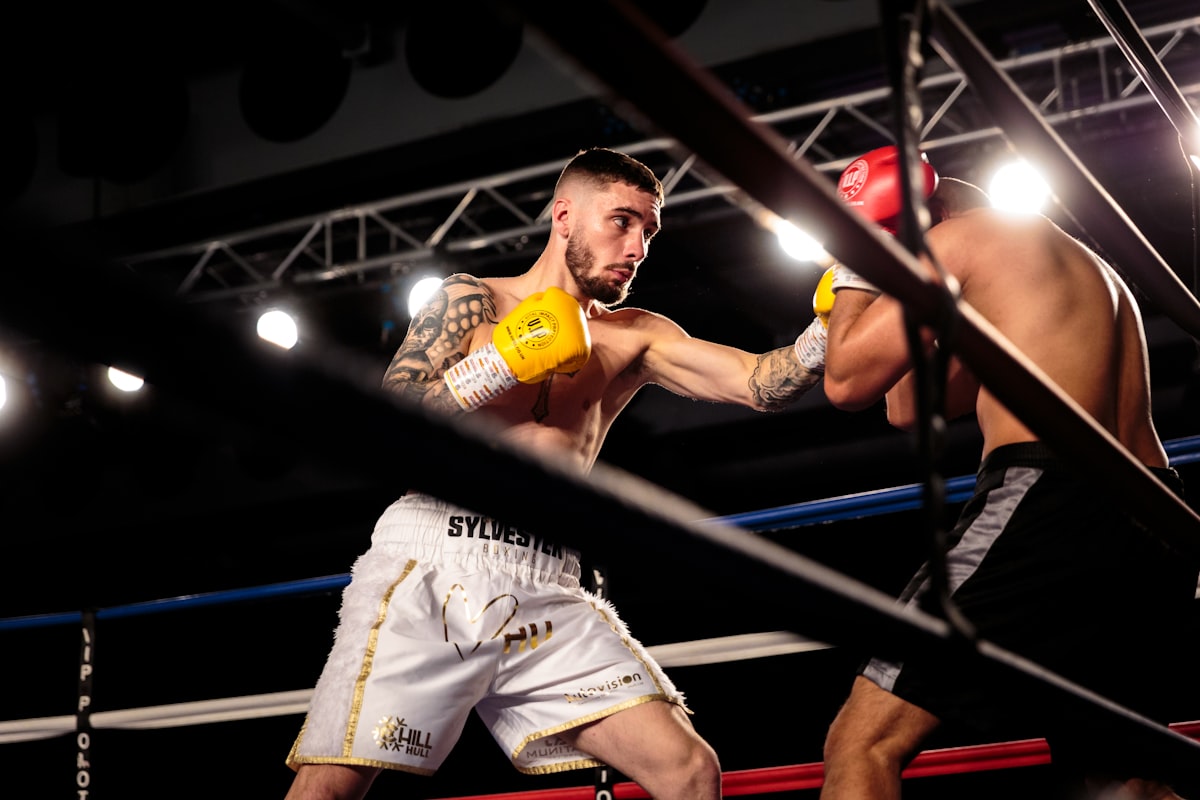
A hook is usually aimed at the side of the head or body. The lead hook is thrown with the hand closest to the opponent, while the rear hook is thrown with the hand farther away. The lead hook generally travels a shorter distance and is easier to disguise after a jab. The rear hook can carry more rotational force, but it often requires more preparation and can leave the boxer exposed if it misses.
The punch should not be understood as a wide arm swing. In proper boxing hook technique, the fist moves around the boxer’s center line on a controlled arc. The exact elbow angle can vary with distance and target, but the elbow should not flare dramatically higher than the fist or collapse tightly against the body. The punch must remain compact enough to protect the chin and recover quickly.
How to throw a hook punch with proper form
1. Start from a balanced stance
Begin in your normal boxing stance with the feet stable, knees slightly flexed, and weight distributed well enough to move in any direction. An orthodox boxer normally has the left foot and left hand forward; a southpaw normally has the right foot and right hand forward. Keep the non-punching hand near the face and the chin slightly tucked.
Do not shift so far onto the front foot that the rear foot becomes passive. A hook needs a stable base for rotation. If the feet are too narrow, the punch can pull the boxer off balance. If they are too wide, hip rotation and recovery become slow.
2. Create the punch with the lower body
For a lead hook, turn the lead foot and rotate the lead hip and shoulder toward the target. The movement should begin from the floor and pass through the legs, hips, and torso. The arm follows this rotation rather than attempting to generate all the force independently.
A rear hook involves rotation from the rear side of the body. The rear foot may pivot as the hip and shoulder turn, depending on distance, stance, and coaching preference. The pivot should be controlled. Excessive spinning makes the punch slower and can expose the back.
3. Shape the arm without locking it
Keep the punching arm bent as the fist travels around the target line. Many boxers use an elbow angle close to a right angle, but the best angle changes with range. At close range, the arm may be more compact; at a slightly longer range, it may open modestly. What matters is that the elbow, wrist, and fist remain aligned and the punch does not become a looping slap.
The wrist should stay straight behind the first two knuckles. The fist should be clenched firmly at impact, not held rigidly throughout the entire movement. A loose wrist can be injured by a poorly aligned contact, especially on a hard target or heavy bag. Hand wraps and properly fitted gloves are basic safety equipment.
4. Keep the opposite hand active
The non-punching hand should remain near the cheek or temple, with the elbow helping protect the ribs. A common technical error is dropping the opposite hand as the hook is thrown. This creates a defensive opening and makes the punch easier to read.
The punching shoulder should also rise slightly to help shield the chin. This is not a substitute for head movement or guard discipline, but it reduces unnecessary exposure during the rotation.
5. Return immediately to stance
The hook is not complete when it reaches the target. After the short contact phase, bring the hand back along a controlled path and re-establish the guard. Avoid allowing the arm to drift down or continue around the body.
A fast recovery has practical value. It allows you to defend a counter, throw a follow-up punch, or move away without crossing the feet. The best hook punch form combines impact with a reliable exit.
Lead hook and rear hook differences
The lead hook is often useful after a jab, feint, slip, or change of rhythm. Because it starts closer to the target, it can arrive quickly and does not require a large body movement. Its limitations are reduced reach and the need to rotate without overcommitting the lead side.
The rear hook can work at close range after a rear straight punch or during an exchange in the pocket. It may also be useful after the opponent moves toward the rear-hand side. However, it can be easier to anticipate because the body often needs a larger rotation. The rear hand must return quickly, particularly if the hook misses.
Stance matchups affect the available angles. An orthodox boxer facing a southpaw may see different openings than an orthodox-versus-orthodox matchup. Those openings depend on foot position, distance, and the opponent’s reactions rather than on a fixed rule that one hook is always superior.
Distance, target, and timing
A hook is most useful at short to medium range. If the opponent is too far away, the punch tends to become a wide swing. If the opponent is extremely close, there may not be enough room for the fist to travel cleanly, and a shorter punch or body shot may be more appropriate.
Target selection also changes the mechanics. A head hook normally requires a stable posture and careful control of the shoulder and elbow. A body hook often involves a level change, but the boxer should bend through the knees and hips rather than folding forward at the waist. Dropping the head carelessly can expose it to an uppercut or knee in unsanctioned situations; in regulated boxing, the priority remains legal technique and defensive positioning.
Timing matters more than throwing the punch as hard as possible. A hook can be effective after the opponent reaches, raises the guard, or moves into range. Feints and straight punches may create reactions that make the curved punch harder to see. Power without timing often produces a slow, predictable swing.
Common hook punch mistakes
- Winding up: Pulling the hand far behind the body announces the punch and delays its arrival.
- Using only the arm: An arm-driven swing reduces balance and places extra strain on the shoulder.
- Dropping the opposite hand: This leaves the face exposed during the rotation.
- Over-rotating: Spinning too far can turn the back, cross the feet, or make recovery difficult.
- Bending the wrist: Poor alignment increases the risk of hand and wrist injury.
- Locking the elbow: A rigid arm absorbs impact poorly and changes the hook into a less efficient punch.
- Throwing from too far away: The result is usually a looping punch that is easy to counter.
- Failing to recover: Admiring the punch or leaving the hand low creates an opening after the strike.
Drills for improving hook punch mechanics
Shadowboxing with pauses
Throw a slow lead hook in front of a mirror or under a coach’s observation. Pause briefly at the end of the movement and check the chin, wrist, elbow, opposite hand, and foot position. Then return to stance. This develops hook punch mechanics without relying on heavy impact.
Wall or line drill
Stand far enough from a wall or floor line that a wide swing would touch it. Practise compact hooks while keeping the elbow and fist on a controlled path. The drill is not intended to force one exact arm angle; it is a reminder to avoid excessive looping.
Bag work at moderate power
On a heavy bag, begin with single hooks at low or moderate intensity. Focus on balance, contact with the correct knuckles, and immediate recovery. Increase power only when the punch remains technically consistent. A bag that swings violently can encourage the boxer to chase it and lose stance.
Pad drills with defensive recovery
A coach can call a lead hook, rear hook, or a simple combination such as jab–lead hook. After every punch, return to guard or move to a safe angle. The purpose is to connect the punch to realistic decision-making rather than practising impact in isolation.
Safety and coaching considerations
Learn the movement under qualified supervision before throwing hard punches at a partner. Use hand wraps, suitable gloves, and a properly secured bag. Contact sparring should follow the rules of the gym, use appropriate protective equipment, and be matched by experience and weight where relevant.
Stop if you feel sharp wrist, elbow, or shoulder pain. Soreness from unfamiliar training is different from acute pain, numbness, or reduced movement. A coach can check technique, but persistent symptoms should be assessed by a qualified healthcare professional. Harder punches are not automatically better punches; alignment, timing, control, and recovery are the more reliable markers of progress.
Frequently asked questions about hook punch technique
Should the elbow be higher than the fist?
The elbow should generally support a compact, aligned punch rather than collapse below the fist or flare excessively high. Its exact position changes with distance and target. A coach should assess the movement in relation to your stance, shoulder mobility, and intended range.
Is a hook punch powered by the arm or the hips?
It is a coordinated movement. The legs and hips initiate rotation, the torso transfers it, and the arm provides the compact shape and final connection. Trying to use the arm alone usually makes the punch wider and less stable.
Why does my hook feel slow?
Common causes include winding up, starting with a large shoulder movement, standing too square, or trying to throw at maximum power from the beginning. Practise a smaller motion at controlled speed, then add rotation and force without sacrificing recovery.
Can beginners practise hooks on a heavy bag?
Yes, but early practice should be supervised and technically controlled. Start with shadowboxing and light pad work if available, then use a well-secured bag with wraps and gloves. Do not use maximum force until wrist alignment and balance are reliable.