 by
by Good catching is built through repetition, but the repetition has to resemble the catches you face in a match. A player taking a close-in catch needs different practice from a fielder tracking a high ball or a wicketkeeper reacting to an edge. These cricket catching drills develop soft hands, sound footwork, quick reactions and better judgement.
You can do most of them with one coach or partner, a cricket ball and a clear area. Start at a comfortable speed, then increase distance, pace and movement only when the technique remains controlled.
Technique before speed
Watch the ball from the moment it leaves the bat or hand. Move your feet so that your body gets behind the line of the ball instead of reaching across it. Keep your head still, relax your fingers and absorb the ball by drawing your hands slightly towards your body.
For catches around chest height, make a secure cup with both hands and keep your little fingers close together. For balls above the waist, fingers generally point upwards. For low catches, fingers point downwards and the hands stay close to the ground. If the ball is moving quickly, avoid stiff arms: soft hands reduce the chance of a rebound.
Partner catching drills
1. Two-hand close catches
Stand about two to three metres apart. The thrower delivers gentle catches to the receiver’s chest, stomach and shoulder line. The receiver begins with two hands and focuses on watching the ball into the hands. Complete 20 controlled catches, then move back only if the technique stays reliable.
This is one of the best basic catching drills for cricket because it establishes hand position and confidence before harder exercises are introduced.
2. Low-catch series
The thrower rolls or underarm-tosses the ball just to the left and right of the receiver. The fielder bends at the knees, keeps the chest over the ball and gathers it with fingers pointing down. After collecting the ball, bring it into the body rather than trying to throw immediately.
Use a softer ball when children or beginners are learning. On a hard surface, keep the pace moderate and make sure the landing area is free of stones and holes.
3. High-ball judgement drill
The thrower sends the ball high and slightly in front of the fielder. The fielder calls “mine,” gets into position early and catches with both hands in front of the face or above the forehead. Begin with straight balls, then add balls drifting to either side.
The main skill is judgement. Take the first few steps quickly, then adjust with smaller steps as the ball descends. Do not turn your back on a moving ball while trying to get underneath it.
4. One-hand reaction catches
Stand close to a partner holding a tennis ball. The partner drops or gently throws the ball towards one hand. Catch with the right hand for 10 repetitions, then the left. Once control improves, the thrower can vary the height and angle.
This drill develops hand-eye coordination and is useful for slips, close fielding and difficult deflections. It should supplement, not replace, two-hand catching practice.
Reaction and close-fielding drills
Reflex wall catches
Stand one to two metres from a solid wall and throw a tennis ball against it with one hand. Catch the rebound with two hands at first. Progress to alternating hands, changing the throwing angle and using a cricket ball only when the rebound is predictable and the space is safe.
Keep the throws controlled. The goal is to react to a changing line, not to throw as hard as possible.
Deflection drill
A coach stands a short distance away and uses a bat, racket or hand to redirect gentle throws towards the fielder. The fielder starts in a balanced stance and reacts after the deflection. Begin with tennis balls, then use a cricket ball if the group is ready and protective equipment is appropriate.
This cricket fielding drill helps players handle edges and ricochets that do not travel in a clean, predictable line. Keep the fielder alert but do not create unnecessary danger by striking the ball at close range.
Slip-catching practice
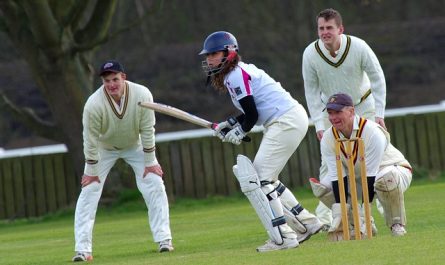
Set two or three fielders in a line beside the coach, leaving enough space for safe movement. The coach uses a bat or a gloved hand to produce gentle edges at different heights. Fielders keep their weight forward, hands low and relaxed, and move their hands towards the ball rather than snatching at it.
Rotate positions regularly so every player practises both the catching angle and the surrounding footwork. Wicketkeeping gloves are not required for slip catching, and the drill should be adapted to the players’ age and experience.
Solo cricket catching drills
Solo practice is useful when no coach or teammate is available. Throw a tennis ball against a wall and catch the rebound, toss the ball high and move underneath it, or bounce the ball at an angle before gathering it. Mark a small target on the wall to make the exercise more consistent.
For a high-catch drill, begin with a short toss and call the catch early. This builds communication habits for team fielding. Add a step to either side before the ball comes down to practise adjusting under pressure.
Wicketkeeping catching drills
Wicketkeepers need repeated practice from a low base. Start in a comfortable crouch with the head still and the gloves in front of the body. A partner rolls balls along the ground, then sends gentle takes that rise around ankle, knee and waist height.
For edge practice, the thrower stands a few metres away and angles tennis-ball throws towards either side of the keeper. The keeper moves the feet first, keeps the body behind the line when possible and receives the ball with relaxed hands. Increase pace gradually; fast throws are not useful if the keeper is losing balance or closing the eyes.
How to structure a catching session
- Warm-up: Use easy tosses and mobility movements for five minutes.
- Technique block: Complete close catches, low catches and high catches at moderate pace.
- Reaction block: Add wall catches, deflections or one-hand exercises.
- Match-skill block: Practise slips, boundary catches or wicketkeeping takes based on the player’s position.
- Review: Stop when concentration or hand position starts to deteriorate rather than chasing a target number.
For a school or club session in Nigeria, schedule demanding catching work when players are most alert and provide regular water breaks, especially during hot outdoor conditions. Use shaded recovery areas where possible, and inspect the practice surface before starting.
Common catching mistakes
- Hard hands: Stiff fingers make the ball bounce out. Relax the hands and give slightly on impact.
- Reaching instead of moving: Take short adjustment steps and get the body behind the ball.
- Looking away: Keep watching the ball until it is secured.
- Practising only easy catches: Mix chest, low, high, lateral and deflected catches.
- Adding speed too soon: Increase pace only after the player can repeat the movement safely.
Frequently asked questions
What is the best drill for improving cricket catching?
Two-hand close catches are the best starting point because they build reliable hand position and soft hands. Add low, high and reaction catches once the player can complete the basic repetitions consistently.
Should beginners use a cricket ball?
They can, but a tennis ball is often safer for early reaction and high-ball practice. Move to a cricket ball when the player understands the movement, the space is suitable and the thrower can control the pace.
How often should players practise catching?
Short, regular sessions are more productive than occasional exhausting sessions. Ten to 20 minutes of focused catching two or three times a week can improve consistency, provided the player maintains concentration and sound technique.
How can a player stop dropping high catches?
Practise getting behind the ball, calling early, keeping the head still and catching with relaxed hands. Start with predictable tosses, then introduce sideways movement and wind only after the basic judgement improves.