 by
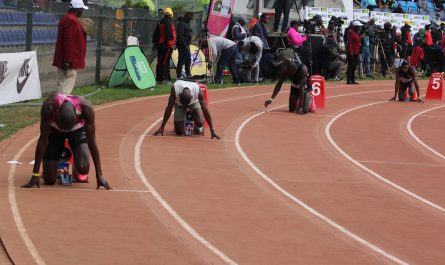
by Plyometrics for sprinters develops the ability to produce force quickly. Exercises such as bounds, hops, and jumps train the stretch-shortening cycle: muscles and tendons absorb force briefly, then release it rapidly. That quality can support acceleration, top-speed mechanics, and finishing speed, but only when the exercises match the athlete’s training level and are performed with controlled landings.
Plyometrics should complement sprinting and strength work, not replace either one. A short, high-quality session is usually more useful than a large volume of tired jumps.
How plyometrics can help sprint performance
Short sprints require fast force production, stiffness through the ankle and leg, and coordination between the hips, knees, and feet. Sprint plyometrics can help an athlete practise these qualities with greater intensity than ordinary running drills.
- Acceleration: Broad jumps, split jumps, and powerful bounds can reinforce forceful projection during the first steps.
- Maximum velocity: Ankling, straight-leg bounds, and low-volume hops can develop quick ground contact and lower-leg reactivity.
- Running economy: Repeated, well-controlled contacts may improve coordination and elastic energy use.
- Elastic strength: Hopping and rebounding exercises challenge the calf, Achilles tendon, and other tissues involved in rapid force transfer.
Plyometrics will not automatically make a sprinter faster. Technique, maximal sprint exposure, recovery, resistance training, sleep, and nutrition remain central. The best plyometric exercises for sprinting are those the athlete can perform quickly without losing posture or landing control.
Effective plyometric exercises for sprinters
Low-intensity drills
These are suitable starting points for athletes who are new to jump training or returning after a break:
- Ankling and dribble runs
- Pogo jumps with small, quick rebounds
- Skipping for height or distance
- Low hurdle walks and controlled step-offs
Keep the contacts quiet and land under control. The goal is rhythm and stiffness, not maximum height.
Moderate-intensity exercises
- Standing broad jumps
- Split jumps
- Single-leg line hops
- Bounds over short distances
- Low box jumps, stepping down after each repetition
These exercises can build horizontal power and single-leg coordination, both of which are relevant to sprinting. Stop a set if distance, height, posture, or landing quality declines sharply.
High-intensity sprint plyometrics
Experienced athletes may use depth jumps, hurdle hops, single-leg bounds, and longer bounding runs. These drills create substantial impact and should be introduced only after the athlete has developed basic landing mechanics, lower-leg strength, and tolerance to regular sprint training.
How to build a plyometric program
Start with one or two exercises and approximately 20 to 40 quality ground contacts in a session. Beginners may need less. Rest between sets until breathing and technique have recovered; two to three minutes is common for demanding jumps.
A practical progression is:
- Learn landing mechanics with low-intensity hops, skips, and small jumps.
- Add bilateral jumps such as broad jumps and low box jumps.
- Introduce unilateral drills, bounds, and more reactive contacts.
- Use advanced depth jumps or high hurdle hops only when the earlier stages remain sharp and pain-free.
Increase only one training stress at a time: exercise difficulty, number of contacts, distance, or frequency. Avoid adding high-volume plyometrics during the same week as a major increase in sprint volume.
Where plyometrics fit in a sprinter’s week
Place demanding plyometrics after a thorough warm-up and before heavy fatigue develops. They can be paired with acceleration sprints or a lower-body strength session, provided the total workload is managed. Many athletes benefit from 48 to 72 hours between hard lower-body or high-impact sessions.
A sample weekly structure could include acceleration and low-volume jumps on Monday, tempo or technical work on Tuesday, maximum-velocity sprinting and strength work on Wednesday, recovery work on Thursday, and another high-quality sprint session on Friday. The exact schedule should reflect the athlete’s age, competition calendar, strength level, and injury history.
On hot days or hard outdoor surfaces, reduce volume and prioritise hydration, warm-up quality, and suitable footwear. Athletes training in Nigeria should also account for heat, humidity, surface firmness, and access to recovery when planning intense jump sessions.
Safety checks and common mistakes
- Too many contacts: High jump volume can cause calf, Achilles, shin, knee, or hamstring problems.
- Jumping while exhausted: Fatigue changes landing position and reduces reactivity.
- Skipping progression: Depth jumps are not a necessary starting point for developing sprint power.
- Poor landing mechanics: Keep the knee aligned with the foot, absorb force through the hip and knee, and avoid uncontrolled inward collapse.
- Ignoring pain: Stop an exercise that causes sharp pain, persistent tendon soreness, swelling, or a change in running mechanics.
Anyone returning from an injury, managing recurring tendon pain, or working with a young athlete should seek assessment from a qualified sports medicine professional or physiotherapist before adding intense reactive jumps.
Frequently asked questions about sprint plyometrics
How often should sprinters do plyometrics?
One session per week can be enough for a beginner. More experienced sprinters may use two sessions, but the total high-intensity workload must include sprinting, lifting, and competition. Quality and recovery matter more than frequency.
Are plyometrics better than weight training for sprinters?
They serve different purposes. Strength training helps an athlete produce force, while plyometric training emphasises producing and absorbing force quickly. A well-designed sprint program often uses both, along with actual high-speed running.
Should sprinters do plyometrics before or after running?
Perform demanding jumps after the warm-up and before hard sprinting if they are a major training priority. Low-intensity drills can also be included in a technical warm-up. Avoid placing high-impact plyometrics after a long, fatiguing session.
Can beginners use plyometric exercises?
Yes, beginners can start with skipping, ankling, pogo jumps, and controlled landing practice. They should postpone high boxes, depth jumps, and large volumes of single-leg bounding until they have adequate control and conditioning.