 by
by A dependable free throw shooting technique starts with repeatable actions rather than extra force. The goal is to make the same shot from the same line every time: balanced feet, a relaxed shooting hand, a consistent target, and a steady follow-through. This approach works for beginners and competitive players on indoor or outdoor courts across Nigeria.
What makes a free throw accurate?
An accurate free throw depends on alignment, a comfortable shot angle, and a routine you can repeat under pressure. Stand with your shooting-side foot slightly ahead of the other foot, keeping both feet behind the free-throw line. Your toes should point generally toward the basket, while your knees and hips stay relaxed.
Place the ball on the fingers and pads of your shooting hand, not deep in the palm. Leave a small gap between the ball and your palm so the wrist can move freely. The non-shooting hand supports the side of the ball but should not push it forward. Keep the shooting elbow under the ball as much as your natural stance allows.
For aiming, choose one clear target and keep it consistent. Many players focus on the front or back of the rim, while others use a spot near the centre of the basket. There is no single target that suits every player. Test one visual cue in practice and keep it if it produces a soft, repeatable arc.
How to perform the free throw motion
- Set your feet: Use the same foot position on every attempt. Keep your weight evenly balanced and avoid standing too far forward on your toes.
- Set the ball: Bring the ball to a comfortable shooting pocket, with the shooting elbow below or slightly inside the ball. Relax your shoulders.
- Breathe and focus: Take a calm breath, then use one short routine such as two dribbles and a pause. Look at your chosen rim target before beginning the shot.
- Load the legs: Bend the knees slightly and let the legs start the movement. The ball, elbow, and body should rise together instead of the arm doing all the work.
- Release smoothly: Extend the legs and shooting arm toward the basket. Let the wrist snap naturally so the ball leaves the fingers with backspin.
- Hold the finish: Keep the shooting arm extended and the wrist relaxed until the ball reaches the rim. A balanced landing helps reveal whether the motion was controlled.
The best free throw arc is high enough to give the ball a useful entry angle without requiring a hard launch. If the ball repeatedly hits the front rim, check for a short finish or too little leg drive. If it flies long, reduce force and make the release softer rather than simply aiming lower.
How to practise free throw shooting
Begin with close-range form shots so the wrist, elbow, and follow-through feel natural. Move to the free-throw line only when you can produce a soft arc and balanced finish. A useful basketball free throw drill is to shoot in small sets while recording makes, misses, and the side of the miss.
Use a simple practice sequence:
- Make five free throws while concentrating on foot placement.
- Make five while focusing on the shooting hand and wrist.
- Make five using your complete pre-shot routine.
- Finish with a pressure set, such as needing two makes before leaving the line.
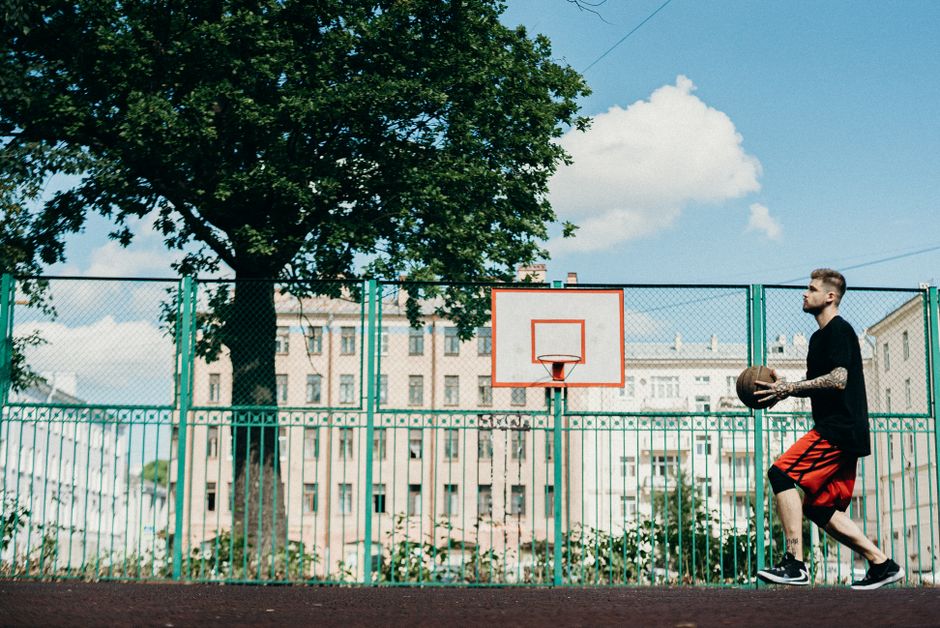
Track percentages over several sessions instead of judging your ability from one short set. For example, a player who makes 7 of 10 one day and 3 of 10 the next needs more routine consistency, not necessarily a complete change to the shot. Practising on the type of surface used in games, including an outdoor court, can also help with balance and footing.
Common free throw mistakes and their fixes
Changing the routine: Different numbers of dribbles or long pauses make the shot harder to repeat. Choose a short routine and use it every time.
Using the guide hand: Side spin or a push from the non-shooting hand can send the ball left or right. Keep that hand supportive and let the shooting hand control the release.
Fading backward: Leaning away from the basket often reduces control and creates a flat shot. Start balanced and finish tall, with the body moving naturally toward the target.
Rushing after a miss: A quick second attempt usually changes the mechanics. Reset your feet, breathe, select the target, and repeat the same free throw form.
Chasing perfect mechanics: Small differences in stance are normal. Prioritise balance, a clean release, a consistent target, and a held follow-through before making major changes.
Free throw technique under game pressure
Game free throws feel different because fatigue, noise, and the score can alter your breathing. Your routine should become a cue that brings attention back to the shot. Use the same breath, dribbles, target, and pause during practice games that you use during ordinary shooting sessions.
For pressure practice, ask a teammate to create realistic conditions: shoot after running, take two attempts with the game score announced, or start again after a miss. The purpose is not to add distractions constantly. It is to learn that the same free throw routine still works when your heart rate is high.
Frequently asked questions
Should I aim at the front or back of the rim?
Either can work. Pick the target that gives you a soft, consistent entry and use it on every attempt. Changing targets from shot to shot makes feedback less useful.
How many free throws should I practise?
Quality matters more than a large number. Start with 30 to 50 focused attempts, divided into sets, and stop if fatigue causes your form to break down. Add pressure sets after your basic technique remains stable.
Why do my free throws miss left or right?
Check whether the guide hand is pushing the ball, the elbow is moving sideways, or your feet are changing position. Film a few attempts from the front and side if possible, then adjust one factor at a time.
Should I jump on a free throw?
A small natural rise can be fine, but the shot should remain balanced. Avoid turning the free throw into a full jump shot. Let the legs provide controlled power while the release stays smooth.