 by
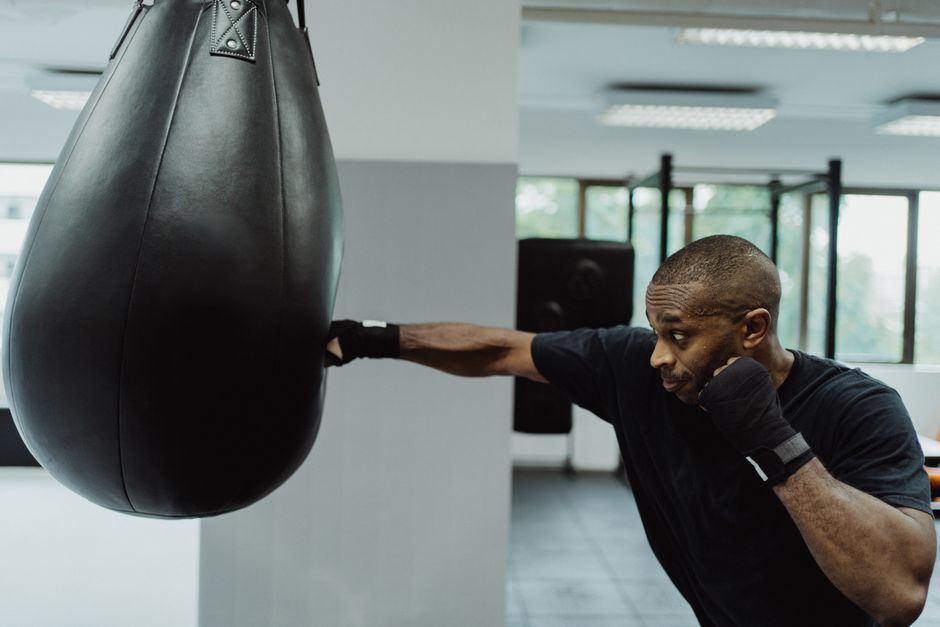
by A speed bag workout is most useful for improving rhythm, timing, hand-eye coordination, shoulder endurance and punching accuracy. It will not replace heavy-bag work, pad drills, sparring or roadwork, but it can sharpen the small technical skills that make boxing combinations smoother.
What a Speed Bag Workout Actually Develops
The bag rebounds quickly after each strike, forcing you to control distance, timing and hand position. A regular speed bag routine can help you develop:
- Rhythm: You learn to maintain a steady striking pattern instead of punching with unnecessary force.
- Hand-eye coordination: Your eyes and hands must track the bag’s movement together.
- Shoulder endurance: Repeated punches build endurance in the shoulders, arms and upper back.
- Accuracy: The target is small, so poor punch placement quickly breaks the rhythm.
- Relaxation: Tense shoulders and clenched fists make the bag harder to control.
A speed bag does not closely imitate an opponent’s head movement or the resistance of a heavy bag. Treat it as a coordination and conditioning tool rather than a complete boxing workout.
How to Hit the Speed Bag Correctly
Stand with your feet about shoulder-width apart and keep your knees slightly bent. Position your body close enough that the bag is in front of your face and upper chest, not far above your head. Keep your elbows raised but relaxed, and hold your hands near cheek level.
Use a small, controlled movement from the wrist and forearm. Strike the lower front section of the bag with the front or palm-side portion of a loosely closed fist. The usual pattern is punch, let the bag hit the platform three times, then punch again. The three rebounds create the familiar rhythm of a speed bag workout.
Start with one hand. Once the movement is consistent, alternate hands, add circles and practise changing direction. Focus on keeping the bag centred rather than hitting it hard.
A Beginner Speed Bag Workout
This 12-minute routine works well for a first session. Rest for 30 to 45 seconds between rounds.
- Round 1 — 2 minutes: Practise the rebound rhythm with your dominant hand. Stop, reset and continue whenever the bag loses control.
- Round 2 — 2 minutes: Use the non-dominant hand. Keep the punches light and concentrate on a consistent path.
- Round 3 — 2 minutes: Alternate left and right punches after every three rebounds.
- Round 4 — 2 minutes: Practise short combinations, such as right-hand, left-hand, right-hand, followed by a reset.
- Round 5 — 2 minutes: Work continuously at an easy pace without trying to increase speed.
- Round 6 — 2 minutes: Finish with relaxed alternating punches and clean technique.
If you cannot maintain the rhythm for a full round, shorten the work period to 30 or 60 seconds. Quality repetitions are more useful than frantic punching.
Speed Bag Routine for Conditioning
After you can control the bag, use timed intervals to make the workout more demanding:
- Six rounds of 2 minutes with 30 seconds of rest for moderate conditioning.
- Eight rounds of 1 minute with 20 seconds of rest for a faster session.
- Three rounds of 3 minutes with 1 minute of rest to build shoulder endurance.
Keep your breathing steady. Exhale lightly during punches and lower your hands during the rest periods. If your shoulders begin to burn so much that your technique changes, stop the round or take a longer break.
Speed Bag Drills to Add Variety
Alternating punches
Strike with the right hand, wait for three rebounds, then strike with the left. This is a simple way to develop timing on both sides.
Side fist strikes
Use the side of a loosely closed fist to strike the bag from slightly different angles. Keep the movement compact and avoid swinging from the elbow.
Double strikes
Perform two controlled strikes with the same hand before changing sides. This drill challenges rhythm and shoulder control, so use it only after the basic pattern feels natural.
Direction changes
Practise moving the bag in one direction, then regain the normal front rebound. Direction changes expose poor positioning and help improve hand control.
Common Speed Bag Mistakes
- Hitting too hard: Excessive force makes the bag rebound unpredictably. Use a light, repeatable touch.
- Standing too far away: You will reach for the bag and lose balance. Adjust your feet instead.
- Watching the wrong point: Track the bag as it returns from the platform, not only after it reaches its lowest point.
- Raising the shoulders: Shrugging creates early fatigue. Keep the neck relaxed and the shoulders down.
- Using only one arm: Include both sides to build balanced coordination and endurance.
- Chasing speed too soon: Slow, clean repetitions create the timing needed for faster combinations.
- Ignoring equipment height: The bag should generally sit around eye to upper-chest level when mounted correctly. Adjust the platform if you are constantly reaching up or bending down.
How Often Should You Do Speed Bag Training?
Two or three speed bag sessions per week are enough for most recreational boxers. Begin with 10 to 15 minutes and increase gradually as your shoulders adapt. Experienced athletes may add short speed bag rounds to a boxing session, but should still balance them with strength work, footwork, heavy-bag practice and recovery.
Stop if you develop sharp shoulder, elbow or wrist pain. Normal muscular fatigue is different from joint pain, numbness or pain that changes your punching motion.
Speed Bag Workout Questions
Can a speed bag help me lose weight?
It can contribute to calorie expenditure and general conditioning, especially when used in timed rounds. Weight loss still depends on your overall activity level, food intake, sleep and consistency.
Is a speed bag good for beginners?
Yes, but the first sessions may feel awkward. Learn the rebound pattern slowly, use light contact and practise short intervals before attempting continuous rounds.
Does speed bag training make punches harder?
Not by itself. It can improve coordination, timing and shoulder endurance, while punching power requires technique, lower-body strength, hip rotation, resistance training and heavy-bag or pad work.
Can I do a speed bag workout at home?
Yes, if the platform is firmly mounted and adjusted to a suitable height. Check the wall, ceiling or frame before training, because a loose platform can make the bag unstable and create a safety risk.